21 Savage and Fivio Foreign’s Clash: A Generational Shift in Hip Hop’s Street Credibility?
January 24, 2026
0
21 Savage's feud with Fivio Foreign highlights a shift in hip hop's perception of street credibility. With rising voices rejecting street life glorification, is hip hop evolving?
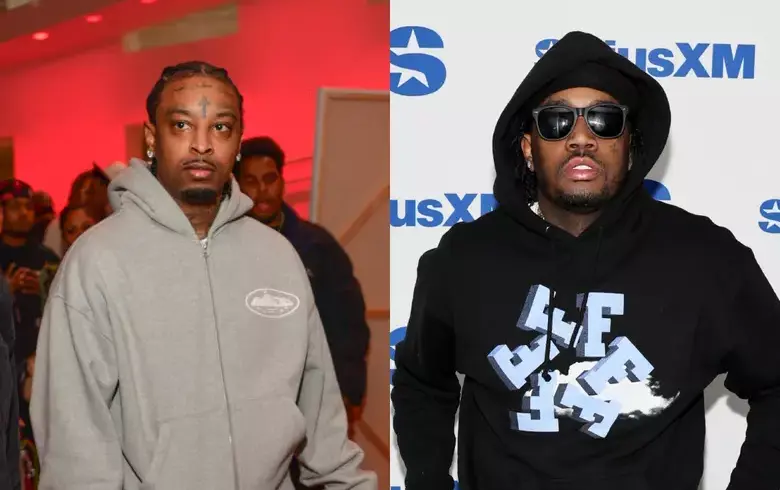
In the ever-evolving landscape of hip hop, the debate around street credibility and authenticity continues to be at the forefront. While the genre has expanded its tentacles into mainstream culture, the tug-of-war between maintaining street roots and embracing wider acceptance remains a hot topic. Recently, this discourse took the form of a verbal skirmish between 21 Savage and Fivio Foreign, two of rap’s leading voices.
The spark for this confrontation was Fivio Foreign’s comments on DJ Akademiks’ ‘Off The Record’ podcast. During the interview, the Brooklyn rapper questioned 21 Savage’s street credentials, indirectly challenging the notion of what constitutes ‘real’ street authenticity in contemporary hip hop. 21 Savage, never one to shy away from confrontation, took to Instagram Live to respond to Fivio’s comments with assertive disapproval. Insisting that older rappers shouldn’t try to instruct him on street matters, Savage declared, “If your a** 35 or older, and you been trying to rap since you was Godd**n 17, 16, 15, don’t say nothing to me ‘bout the streets.”
This clash is more than just a war of words between two artists; it underscores a significant generational shift in hip hop. For many younger rappers, the ‘street life’ narrative is more a burden than a badge of honor. Savage’s declaration, “F**k the streets,” which has become something of a manifesto, echoes the sentiments of rappers who see more value in transcending the hardships of street life than glorifying them.
The tensions escalated further with Savage threatening to “slap the s**t out of his critics in real life,” accusing Fivio of chasing clout by engaging in the public feud. He further criticized his detractors, describing them as “old as hell” and pursuing relevance through cheap shots rather than artistic merit. This rhetoric speaks to a broader frustration with the ongoing pressure to prove one’s street credentials in a rapidly changing hip hop environment.
Fivio didn’t shy away from a rebuttal, taking to Instagram Stories to dismiss 21 Savage’s comments and doubling down on his initial critique. He left a succinct message for Savage, showcasing no willingness for reconciliation, but rather intensifying the beef. The back-and-forth between the two rappers is illustrative of a larger conversation about the terms and conditions of respect and legitimacy in today’s hip hop community.
21 Savage’s stance on the streets reaches beyond personal squabbles. During the promotion of his WHAT HAPPENED TO THE STREETS? project, Savage shared his reflections on the detrimental impact of street life, stating, “F**k the streets. We ain’t get s**t but trauma from that s**t.” This resonated with artists like G Herbo and Meek Mill, who publicly backed Savage’s message. Yet, the division within the hip hop community remains pronounced as others like 6ix9ine and HoneyKomb Brazy resist this new school of thought.
What’s undeniable is that hip hop is at a crossroads. The increasing willingness of artists like 21 Savage to reject traditional street ideals signals a pivotal shift. This shift from glorification to a more nuanced understanding of street life as something to overcome rather than celebrate is, arguably, a much-needed evolution. The conversation between these rappers isn’t just about credibility, but about what hip hop values in the contemporary age.
The Savage-Fivio saga captures the pulse of current hip hop culture and its ongoing identity crisis. As artists navigate their paths, the genre’s future will likely be defined by those who can bridge the gap between authenticity and evolution. In this phase of hip hop’s journey, the true measure of an artist might just shift from street credibility to personal growth and broader cultural impact.