21 Savage vs. Fivio Foreign: A Generational Clash Over Street Credibility and Hip Hop’s Evolution
January 25, 2026
0
21 Savage and Fivio Foreign clash over street credibility, reflecting hip hop's evolving narrative from glorifying street life to advocating for growth and mental health.
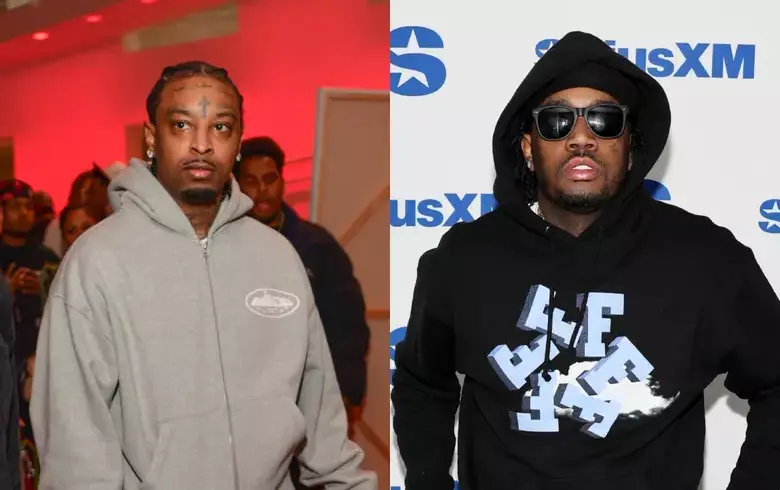
In the ever-evolving world of hip hop, where authenticity and street credibility often reign supreme, a public debate has surfaced between two generational talents: 21 Savage and Fivio Foreign. The conversation isn’t just about street cred—it’s about how hip hop itself is transforming.
Earlier this week, tensions flared after Fivio Foreign questioned 21 Savage’s realness. During an appearance on DJ Akademiks’ ‘Off The Record’ podcast, the Brooklyn rapper implied that Savage had softened, challenging the Grammy-winning artist’s street credentials. In response, 21 Savage took to Instagram Live to vehemently defend himself, igniting a social media firestorm.
“If your a** 35 or older, and you been trying to rap since you was Godd**n 17, 16, 15, don’t say nothing to me ‘bout the streets,” Savage retorted. The underlying beef reflects more than just personal animosities; it uncovers a broader discourse about the evolving priorities and messages within hip hop.
This tension emerges from 21 Savage’s recent proclamation: “F**k the streets,” a statement that’s part of his ‘WHAT HAPPENED TO THE STREETS?’ campaign. It signifies a paradigmatic shift, questioning the unyielding glorification of street life. Savage posits that the streets yield more trauma than triumph—a sentiment that has struck a nerve in the hip hop community.
The issue is generational but also existential. For decades, authenticity and allegiance to the streets have served as a rite of passage for hip hop artists. Yet, Savage, alongside artists like Meek Mill and G Herbo, is urging a reassessment. They suggest that wisdom and growth should take precedence over outdated codes of loyalty.
As Fivio Foreign countered on his Instagram Stories, “I said what I said. No back and forth [with] a n**ga who said, ‘F the streets.’” For Fivio, the street narrative remains pivotal—yet Savage’s modern narrative is gaining traction among younger fans tired of street-spawned adversity.
Some, however, disagree with Savage’s thesis. Notably, 6ix9ine and HoneyKomb Brazy continue to uphold traditional street values, seeing Savage’s stance as a betrayal. The opposition underscores a poignant divide within rap culture: Is it time for the genre to evolve past its ‘tough guy’ tropes?
21 Savage enters this dialogue with authority. Despite his London origins, his compelling personal evolution—from street hustler to chart-topping artist—offers him unique credibility. His earlier albums, filled with visceral tales, have now morphed into narratives advocating for mental health and self-improvement.
The question remains: will more artists find courage in Savage’s vulnerability? His advocacy isn’t about dismissing his roots but shedding light on their enduring impact. By saying “F**k the streets,” Savage encourages a narrative shift toward constructive growth.
This debate isn’t new, but it feels reinvigorated by the changing contours of the world today. As the hip hop community absorbs Savage’s challenge, other artists may find themselves reflecting on what legacy they wish to leave behind—grit or growth?
Undoubtedly, this conflict between 21 Savage and Fivio Foreign encapsulates a pivotal moment in hip hop’s evolution. As the genre stands at this crossroad, pondering whether to embrace its past or redefine its future, the only certainty is that discussions like these will continually shape its trajectory.
Ultimately, hip hop is more than a genre; it’s a cultural movement. And as movements go, sometimes they need a nudge—if not a shove—towards progression.