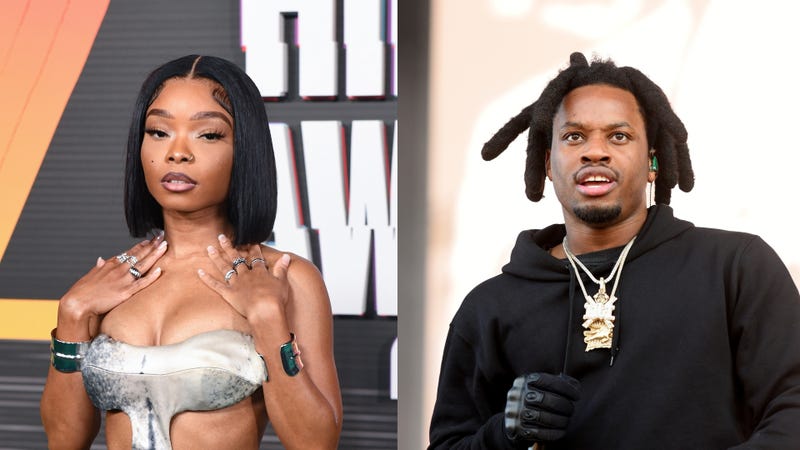
In the ever-evolving landscape of hip hop, where debates about its direction and authenticity are as prevalent as the bass-heavy beats, Lola Brooke finds herself standing at a crossroads between the new wave and the golden era. The rapper recently addressed claims by Denzel Curry, who boldly declared that commercial rap is ‘dead.’ Brooke, known for her hit ‘Don’t Play With It,’ pushes back with conviction, arguing that art’s vitality lies in its power to evolve while respecting its roots.
Denzel Curry, a critical voice in the hip hop community, sparked controversy last week when he took to social media to express his disillusionment with the current state of rap music. In a message riddled with frustration, Curry pointed fingers at both old-school artists and the new generation, lamenting the alleged loss of craft and originality in mainstream music.
Lola Brooke didn’t hold back in her response, emphasizing the need for mutual respect between hip hop’s veterans and emerging stars. Speaking to TMZ, the Brooklyn native shares her perspective, standing firm as an example of an artist who bridges the generational gap. Her track ‘Pain,’ which ingeniously samples Mary J. Blige, serves as her testament to the genre’s dynamism.
“Mary cleared my sample for ‘Pain,’ and I made sure that I gave that woman her props,” Brooke stated, illustrating her commitment to honoring those who paved the way while forging her unique path forward. Her approach suggests that acknowledging past influences can coexist with innovation.
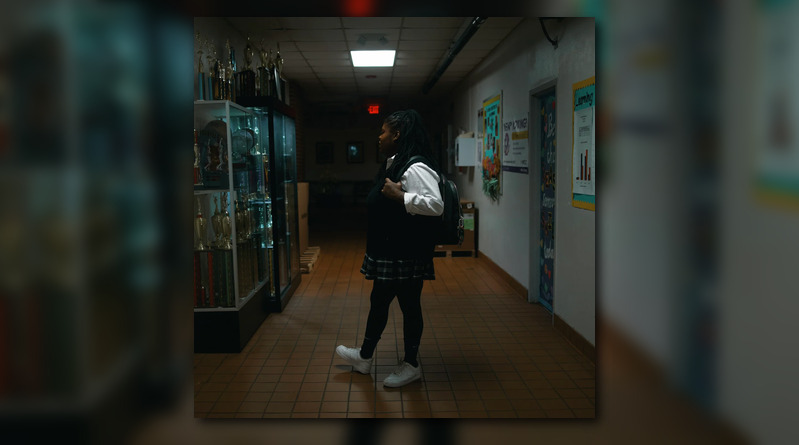
Brooke’s comments arrive at a pivotal moment in her career, as she recently dropped her sophomore project, iight bet! This release not only showcases her artistic growth but also underlines her critical take on maintaining authenticity in a rapidly commercializing industry. With tracks like ‘Get Money’ and ‘Invest’ featuring N3WYRKLA, Brooke balances catchy hooks with hard-hitting substance.
The debate over the state of rap is nothing new. In recent years, artists like JPEGMAFIA, Lil Yachty, and even Travis Scott have voiced similar skepticism about the genre’s current trajectory. They argue that too many artists are replicating the success of top-tier acts like Kendrick Lamar, Drake, and J. Cole, rather than pushing boundaries creatively.
Lola Brooke’s narrative, however, shines a hopeful light on the discourse. She encapsulates the belief that while genre evolution is inevitable, it does not have to come at the expense of its legendary beats and bars. Indeed, it can be the fuel that propels it forward into uncharted territories.
Reflecting on ‘Pain,’ Brooke discusses the influence of Mary J. Blige, known for her powerful themes of resilience and struggle. “Mary got so much music about pushing through and overcoming,” Brooke acknowledges, “so her words in the ‘No More Drama’ sample — and just who she is in general — really brought a special layer to the song.”
This dialogue illustrates a broader narrative within hip hop, one that consistently cycles through periods of critique and reinvention. While some are quick to lament the genre’s apparent decline, others, like Brooke, are eager to infuse it with fresh perspectives, validating Curry’s critiques while crafting a counter-narrative of their own.
In the end, Lola Brooke’s discourse is more than a mere rebuttal; it is an invitation to respect the complexity and richness that hip hop can encompass. The perennial evolution of the genre is not a sign of decay, but rather evidence of its enduring strength and capacity to resonate with both a contemporary audience and the legends who laid its foundation.