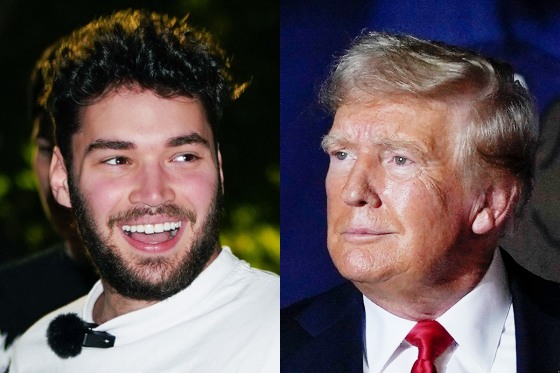
In the ever-evolving world of internet streaming and social media commentary, few figures have made waves quite like Adin Ross. A prominent streamer known for his unabashed online persona, Ross recently found himself engulfed in controversy once again. This time, during a livestream, he admitted to using the N-word when listening to hip-hop music. The admission, delivered with a startling frankness, has ignited a storm of backlash across social platforms.
Adin Ross, who has cultivated a massive following through his often controversial antics, seems to thrive on the edge of cultural norms. On Friday, November 28th, Ross spoke candidly to his audience, saying, “Whenever I listen to rap music… there’s times where I say it.” This revelation was met with a swift and vociferous response from fans and critics alike.
The 25-year-old’s comments have re-ignited discussions around racial sensitivity and accountability in the digital age. Using such language, particularly by individuals outside of the Black community, remains a highly charged issue. It’s one that delves deep into the conversations about who gets to use certain words and why.
The streamer attempted to mitigate the controversy by suggesting that many in the streaming community engage in similar behavior but are unwilling to admit it publicly. “Allegedly, I believe that every single streamer f**king says it,” Ross argued during his stream, asserting that those who claim otherwise are “full of f**king bullsh*t.” This defense did little to quell the backlash, instead sparking further debate about the responsibilities of public figures on digital platforms.
Ross’s comments have elicited responses from various industry figures. Artists like Sexyy Red, DDG, and Duke Dennis have all expressed their disdain for his repeated use of the racial slur, underscoring the broader cultural discussion it touches upon. This incident, however, is far from Ross’s first controversy.
Earlier in the year, Ross’s name was embroiled in another racial incident involving his manager. Streamer Kai Cenat disclosed that Ross’s manager had directed the N-word at him, an event that ultimately led Cenat to break ties with Ross. This incident added layers to Ross’s already complex public persona, highlighting a pattern of racially insensitive behavior that critics argue has yet to be adequately addressed.
The continuous controversies Ross finds himself in raise important questions about the impact of influencers who wield substantial clout over their often young and impressionable audiences. It begs the question: should there be regulatory measures to ensure that those with influential platforms are held accountable for their actions?
Adin Ross’s penchant for controversy presents a case study in modern digital celebrity. In an era where content is king and clicks translate directly to currency, Ross’s actions demonstrate a troubling trend where controversy and insensitivity often correlate with success. Yet, as public discourse evolves, so too must the accountability measures for those who shape it.
As of now, Ross seems to remain unfazed amidst the uproar, continuing his streaming activities as the digital community debates the broader implications of his actions.
The reaction to Ross’s latest misstep underscores the changing landscape for online personalities. As audiences grow increasingly discerning, the pressure mounts for creators to navigate the fine line between entertainment and respect—a balance that, for Adin Ross, seems to frequently tip into contentious territory.
The conversation about linguistic boundaries in music and entertainment will likely continue to develop, as will ongoing scrutiny on those like Ross who operate at the intersection of influence and controversy.