
From Streamer Beef to Rap Hit: The Evolution of Raud Geez’s ‘Over’
- April 29, 2026
- 0
Raud Geez successfully turned a streamer clash into a hit with the single 'Over,' demonstrating the huge potential for online personalities in the music industry.


Raud Geez successfully turned a streamer clash into a hit with the single 'Over,' demonstrating the huge potential for online personalities in the music industry.
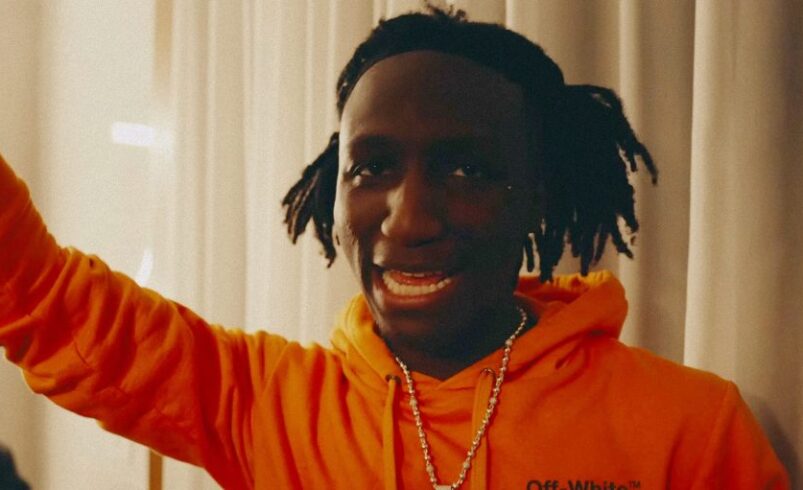
In the rapidly evolving world of music and the internet, convergence is becoming the norm. A quintessential example of this is the recent rise of Raud Geez, a streamer who has now a foot firmly planted in the rap world, thanks to his latest single, “Over.” But how does a piece of music rise from the ashes of streamer quarrels and morph into a cultural hit?
Raud Geez, a name synonymous with streaming under the moniker GE3Z, recently released his single “Over.” The catchy and infectious melody didn’t just arise from creativity; it was sculpted amidst the chaos and drama surrounding the internet and streaming world. This confluence is what sets the single apart, making it not just another tune but a fascinating case study of the interplay between entertainment mediums.
Streamer culture, enriched by vivid personalities and theatrical, at times controversial, content, is increasingly feeding into other entertainment sectors. The hip-hop world is perhaps the most natural recipient of this expansion, given its inherent ties to the pulse of modern culture. At the heart of this symbiosis is Raud Geez, who has managed to turn the chatter and controversy from streaming platforms into a formidable stepping stone.
Raud Geez’s journey to the spotlight began on platforms like Twitch, populated by a spectrum of streamers — from wholesome to provocative. Known for his engaging presence, Raud managed to leverage not only his streaming skills but also his ability to weave narratives through music. “Over” stands as a testament to his dual capacity to entertain both through the screen and through speakers.
The song itself is a rollercoaster of beats and witty lyrical hooks, as shown in the emblematic line “I had a bitch a little bit / that shit over now.” The cadence, at times high-pitched reminiscent of Lil Tecca, plays out on a backdrop of brooding, syncopated drums, a hallmark of Philadelphia’s contemporary rap scene. Such a vibrant mix is a musical nod to the likes of Skrilla and his hit “Doot Doot” — a reflection of the gritty yet catchy soundscape of the genre.
Yet, what truly propelled “Over” into the limelight was not just its musicality; it was the stir it caused within the streaming community. Notable figures such as Adin Ross and Cuffem — known for their contentious content — openly criticized the song, inadvertently causing it to go viral across streaming fanbases. Ironically, these detractors played a vital role in amplifying the song, showcasing the dynamic where negative publicity can often equal more exposure in the digital world.
One must appreciate Raud’s strategic incorporation of the streaming culture into his music. His lyrics allude to the Clover Boys, hinting at his ties to streamer Kai Cenat and the broader AMP, creating a tapestry that resonates deeply with the digital audience. This kinship is what made “Over” not only a song but an anthem that speaks directly to those who tuned in not just for the music, but for the drama, conflict, and relatability of the narratives they regularly consume.
The story of “Over” is emblematic of an industry trend: the metamorphosis of online creators into bona fide artists. Such transformations are facilitated not by mere chance, but by understanding the pulse of one’s audience and utilizing the tools of engagement and controversy. Raud Geez’s success underscores the reality that the streaming economy, with its own logic and mechanisms, is fuelling a new generation of hits that blur the lines between audio and visual, between creativity and controversy.
In essence, “Over” is not just a product of Raud Geez’s individual talent. It’s a symphonic blend of cultural elements, a testament to how music today can emerge from the wild, unpredictable, and oftentimes contentious world of online streaming. As more artists like Raud manage to untangle the complexities of these digital ecosystems, the lines dividing musicians from streamers will continue to fade — and the catchy rhythms of songs birthed from this milieu will continue to echo.
The story of “Over” is a reminder: In the landscape where digital culture and music intersect, controversy might not be the enemy we perceive, but the catalyst for something truly extraordinary.