History of Hip-Hop: Post Malone – Multigenre Rock Star
- October 17, 2025
- 0
The article explores Post Malone's unique position within the hip-hop scene as an artist who defies genre boundaries.


The article explores Post Malone's unique position within the hip-hop scene as an artist who defies genre boundaries.
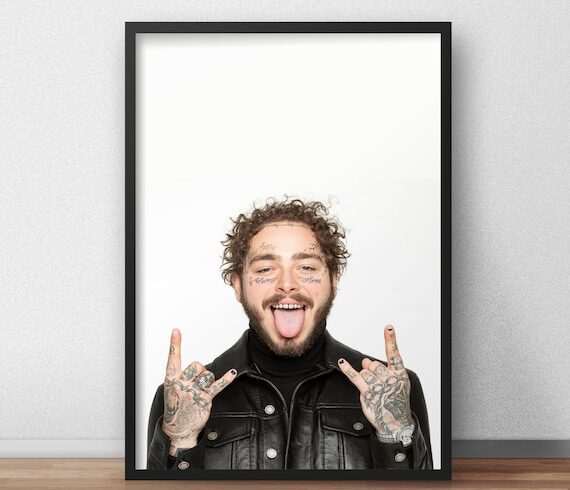
Austin Richard Post is one of those people whose popularity extends far beyond the genre of rap music, yet he doesn’t quite fit the definition of a rapper. How did this happen?
Posty himself is a very extraordinary person, and his uniqueness manifests in everything he does.
For example, he once spent a lot of time searching for a bunker in case of an apocalypse. And he found one. However, he spent about $3,000,000 on such a specific property. Additionally, Posty regularly sports hairstyles from the 80s, loves all sorts of geeky things, and believes that being humble is very important.
At the same time, he loves firing guns, smashing guitars on stage, and never hesitates to speak his mind, even if it contradicts the majority opinion. Thus, one of his quotes caused quite a stir in the rap community and the African-American community in general. The reason was the allegedly disrespectful attitude of Austin towards African-American culture.
“If you’re looking for meaning, if you want to cry, if you want to think about life, don’t listen to hip-hop. Rappers have written many great songs where they talk about life and rap about real problems, but right now there are few such people left.”
Of course, this quote was taken out of context, but most black culture carriers saw what they wanted to see. History remembers many cases of unfair and disrespectful treatment towards African-Americans, and their aggressive reaction can be understood. But Austin clearly had no intention of mocking anyone.
Years earlier, Posty was called a “culture vulture” because he mixes rap with other genres. In English, this term implies a person appropriating someone else’s culture and allegedly stealing elements from it, in this case, the culture of black people. So, the negative attitude of some African-Americans towards him developed long before this incident. Austin always tried not to pay attention to such manifestations of “public love,” but eventually, he felt compelled to respond. Posty said he meant no harm but he couldn’t change the perception of himself.
“I definitely feel it’s hard to be a white rapper. But I don’t want to be a rapper. I just want to be a person who creates music.”
And this, probably, is the essence of Austin. He doesn’t want to confine himself to one genre and does what he thinks is right, and I completely agree with that. Can we seriously argue today that a representative of one national/racial group cannot do what another does?
Austin has actually faced prejudice before. Take his first big hit “White Iverson.” This song gave him a major label contract and a big pile of money in just a month. All of this despite writing it when he was in a very difficult life situation: after deciding to move from Texas to Los Angeles, he didn’t have a dime. Posty literally slept in a closet and had no idea what tomorrow would bring.
Nevertheless, his success story did not impress everyone. I remember well how people in both the English-speaking and Russian-speaking segments of the internet predicted that Malone wouldn’t go beyond one hit because a musician who posts his tracks on SoundCloud can’t make it as a star.
“Congratulations” became another breakthrough track in Malone’s career and perfectly described what the author was going through at a particular moment in life. “Congratulations” is a response to everyone who didn’t believe in him. Literally, every line of the song boasts that he finally achieved what he had been struggling towards for so long.
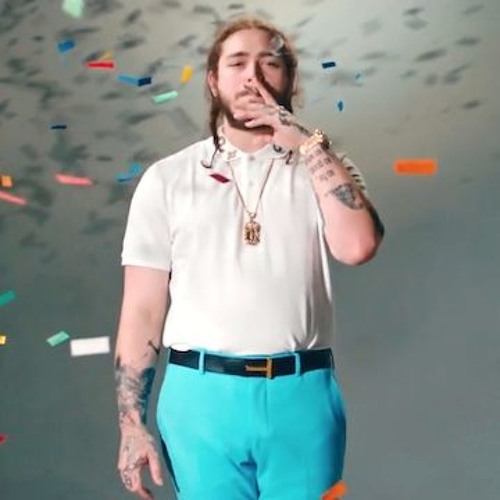
Austin did not sacrifice his principles or views to achieve success. He did not bend to the labels’ terms and kept following his line until he won outright. Even his completely unconventional appearance wasn’t an obstacle on his path to great success. I won’t even mention how Malone dresses and gets his hair done.
The next stop in Posty’s career, without exaggeration, became crucial for him. The track “Rockstar” conquered radio stations worldwide. It also brought Malone his first Billboard trophy for best rap song of the year. Despite this, detractors still found things to criticize.
At some point, critics began to feel that Posty undeservedly topped the global charts (including Billboard), and another wave of criticism descended upon him. They argued that a looped chorus of the song “Rockstar,” posted on the Republic Records’ channel, unfairly garnered tens of millions of views, thus “boosting” the track’s promotion to the chart tops. It was later revealed that it wasn’t this but rather streaming and downloads on streaming services that played a key role in promoting the song.
If we’re not talking about statistics or popularity, “Rockstar” is another soundtrack from Austin’s life. About a year had passed since “Congratulations” was released, and much had changed in Posty’s life. “Rockstar” is a transformation song, reflecting how much Austin changed after his first success. Posty matured but managed to retain his “self.”
Changes in character and global success, undoubtedly, also affected his subsequent music. Malone’s live performances can hardly be distinguished from those of 80s rock stars, and on the studio album “Beerbongs & Bentleys,” you can find numerous references to various musical genres. For instance, the track “Over Now” resembles a song from a rock album, yet still retains some elements of hip-hop.
In this, by the way, lies one of Malone’s greatest achievements. Posty is an innovator. Unlike Kanye, he doesn’t shout about it at every turn but makes it so that people themselves talk about his achievements. Undoubtedly, the way he mixes genres today will significantly impact what music will be tomorrow.
Meanwhile, there is a barely noticeable but very important connection between the processes currently happening in the world and what Posty’s music represents. As we all know, most Western countries have gone through all sorts of equalization of various social groups. For example, the feminist motto “don’t tell a woman she can’t do what a man can” amusingly intersects with Posty’s situation because throughout his career he has been told that he “can’t” either. In his case, it’s more a matter of racial prejudices, but parallels can certainly be drawn. In music, and especially in such a progressive genre as hip-hop, there should be no such obstacles.
“It’s hard to be young at all times. Now it’s especially difficult because many factors are beyond your control. The economy and Generation X make our future darker than ever. There’s a lot of shit going on behind the scenes that most people don’t see.”
Another parallel that can be drawn between Austin and societal processes concerns borders. Societal boundaries blur more with each year, and stereotypes, albeit slowly, are crumbling. Similar things happen with Posty’s music, which with each of his new releases becomes less and less defined by any particular genre.
Rap regularly features new artists pushing the genre’s boundaries, but most remain in history merely as experimenters. Simply put, their work does not significantly impact the development of the genre itself. However, Malone managed to make something global from his music. Thanks to people like Austin, musical boundaries might disappear entirely in the future. And this would be quite logical, considering what’s happening in the world right now.