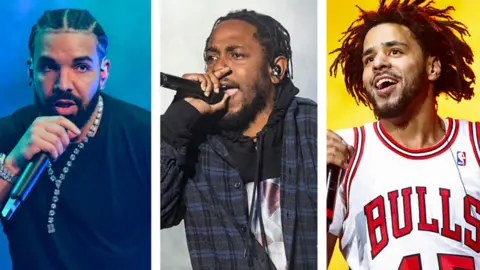
In the ever-erupting volcano of music rivalry, timing can be everything. For Drake, a slayer of beats and billboard records, and J. Cole, a master of lyrical double entendres, a new dimension has emerged—a battle of the releases, sparking intense fan reactions. It’s not just about who drops what; it’s about who drops when.
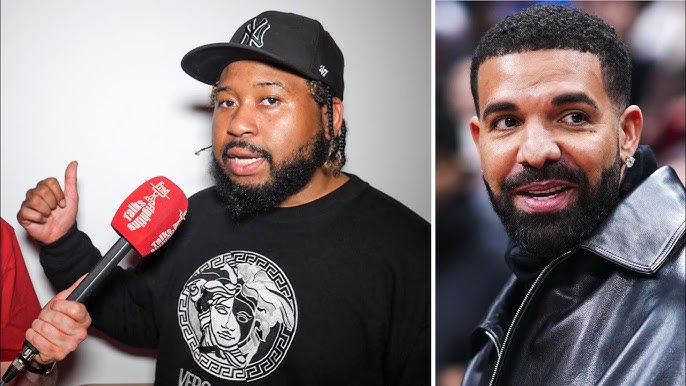
In a world where album releases are ceremoniously awaited by millions, DJ Akademiks, a crucial player in hip-hop media, has ignited a storm by releasing a snippet from Drake’s upcoming album, Iceman, just hours before J. Cole’s highly anticipated The Fall-Off hit the airwaves. To the uninitiated, this appears to be a typical promo strategy. Still, for ardent fans of both artists, it’s akin to musically ‘stepping on someone’s toes.’
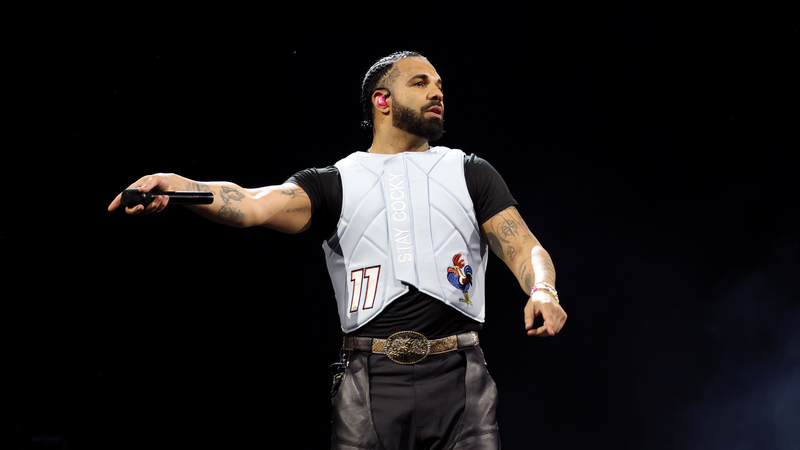
Drake, who remains a polarizing figure in the industry, is notorious for his lyrical prowess and ability to vacillate from heartfelt emotional storytelling to barbed rap battles. The snippet, released by Akademiks, saw Drake showcasing his characteristic firepower, rapping, “You know what, don’t call me no greatest, them guys you sayin’ are great makes that an understatement.” These lines are as loaded as a flare gun—and presumably stirred enough speculation regarding the targets of his innuendo.
J. Cole’s fans, not the kind to take perceived slights lightly, voiced outrage over social media, accusing Drake of deliberately trying to divert attention from Cole’s new release. Sentiments were magnified by users who theorized that Ak, as his devoted supporters call him, played a role in orchestrating the timing of the leak to favor Drizzy over Cole.
One social media user reflected the widespread sentiment with stark clarity: “Doing this as Cole is dropping is some real [h**] a** sh**. And you know Ak got paid for this as well. Says a lot.” Another user added, “Drake is such a weirdo for sending that snippet to Akademiks when Cole’s album was about to drop, desperately trying to steal Cole’s shine.”
Despite the uproar, DJ Akademiks insists on the absence of any hidden agenda involving Drake. He elaborated on his process saying, “I made that call. I had this snippet for about four days. How I got it, I won’t mention…,” emphasizing his role as a media personality who curated its release not directly from Drake, but through his personal networks, asserting his independence and commitment to his journalistic duties.
Yet, for fans, even this transparent admission did little to ease the feeling that their musical experience of Cole’s The Fall-Off was undermined.
Historically, Drake and J. Cole have maintained a complex relationship in the spotlight—not adversaries in the traditional sense, but certainly two forces constantly juxtaposed. Both artists have, over time, shared public expressions of respect for each other’s craft; yet, the competitive tension remains palpable, akin to two seasoned gladiators sharing the same arena.
So, what does all this mean for the larger hip-hop landscape? It’s a classic reminder of the unwritten rules in music—where tactical excellence in the business sometimes trumps pure artistic expression. And while fans remain divided, simultaneously praising and condemning, one thing is certain: both Drake’s Iceman and J. Cole’s The Fall-Off will stand tall as significant chapters in their illustrious careers.
In hip-hop—where bravado and sensitivity intertwine with fame and fidelity—timing is everything. Whether deliberate or accidental, the ripple effect of a well-timed release can enthrone or dethrone a superstar. In the end, it is a vivid testament to the captivating and often contentious world of hip-hop—a world where the beat never stops, and neither does the conversation.