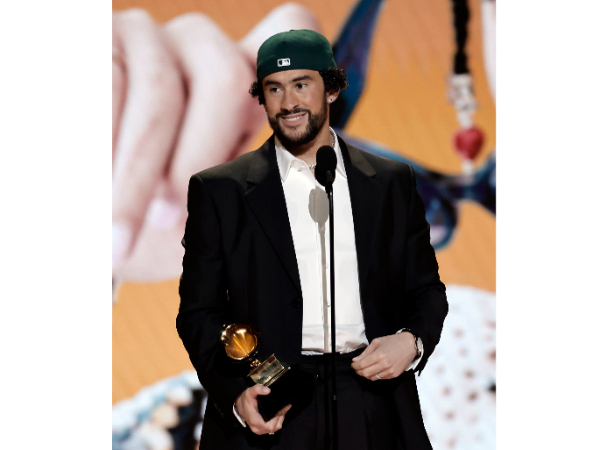
In what can only be described as a landmark moment in music history, Bad Bunny captured the spotlight with a Grammy win for Album of the Year. This was not merely a victory for the artist, but a resounding affirmation for Spanish-language music in a predominantly English-language ceremony. This achievement opens doors not only for Latin artists but potentially all non-English musicians striving for acknowledgement on a global stage.
Bad Bunny, born Benito Antonio Martínez Ocasio, hails from the small town of Vega Baja, Puerto Rico. From these humble beginnings, he emerged to become a global sensation, a journey paralleling the rise of Latin music’s influence worldwide. His success story is one of both cultural pride and resilience—an artist grounded in his roots yet fearlessly expansive in his musical explorations.
This particular Grammy-winning album, titled Debí Tirar Más Fotos, serves as Bad Bunny’s love letter to his beloved Puerto Rico, capturing the struggles of its people as much as its vibrancy. It’s an homage to family, friends, and the homeland—a narrative enriched by his personal experiences and his country’s history of colonial impacts and displacement.
The significance of this award goes beyond accolades for outstanding music. It’s a representation of cultural transcendence, a milestone where an album entirely in Spanish received the highest recognition at The Grammys, not just the Latin Grammys. In many ways, this confronts and begins to dismantle long-standing language barriers within the music industry.
Reflecting on Bad Bunny’s rise, his journey mirrors that of other iconic trailblazers who have pushed boundaries and challenged norms. Artists like Shakira and Ricky Martin paved the way for crossover success in previous decades, but Bad Bunny’s triumph feels uniquely aligned with today’s world—a globalized and increasingly interconnected cultural landscape.
In evaluating the impact of Bad Bunny’s win, we must acknowledge the connective power of music and its role as a unifying language. His work resonates with millions, delivering messages of empowerment, joy, and reflection—all while cementing Puerto Rican culture firmly in the global conversation.
As Bad Bunny stood on stage to accept his Grammy, he embodied not just himself but the spirit and voice of countless others who remain underrepresented. It was a victory for artists who stay true to their cultural identity while demonstrating the universal power of music to bridge divides.
As we look forward, Bad Bunny’s success beckons a new era where varied languages and cultures find recognition and celebrate within mainstream frameworks. It sets a precedent that greatness knows no boundaries and can come from any corner of the world.
To truly honor this moment, dive into Bad Bunny’s discography, which spans from vibrant club bangers to contemplative ballads. His work reflects a tapestry of modern-day Puerto Rican culture—a dynamic blend of reggaeton and perreo intertwined with heartfelt narratives.
Videos like “Soy Peor” and “Yo Perreo Sola” highlight this mix, blending catchy beats with socially aware lyrics. Each song tells part of the broader story about identity, love, and the push for social change.
In the midst of celebrations, while Bad Bunny rightly basks in his well-deserved acclaim, there lingers an aspiration for others. His Grammy win is not just a test of personal success but a symbolic moment of inclusive progress—a message echoing through music venues and airwaves, inspiring the artists and dreamers of today and tomorrow.