Hip Hop Chronicles. Part 1
- October 16, 2025
- 0
The article traces the development of hip-hop culture from its origins in the 1960s in New York's ethnic neighborhoods to a global movement.


The article traces the development of hip-hop culture from its origins in the 1960s in New York's ethnic neighborhoods to a global movement.
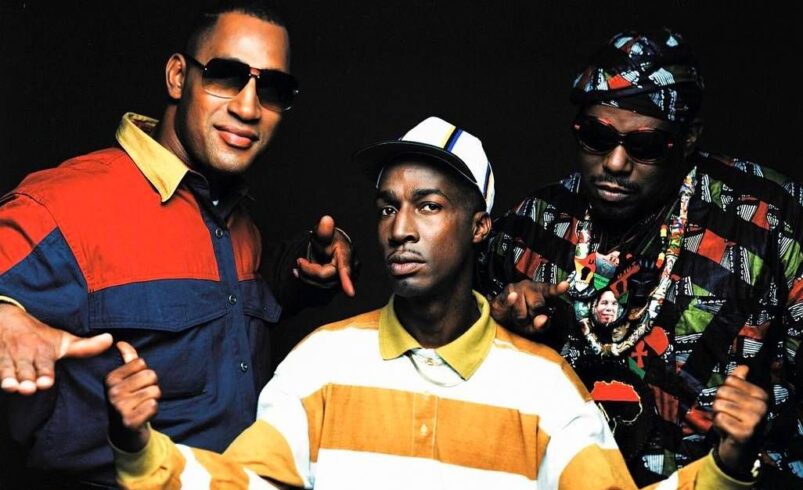
Hip-hop culture originated in New York among African American and Latino neighborhoods. Street culture has existed for centuries in all countries, but in the US, where ghettos exist, it was particularly isolated from society. Then it burst onto the streets of white neighborhoods and then into the masses—show business, discos, cinema, and so on.
Hip-hop culture has been recognized worldwide since the 1970s. Its main components are rap (MCing), breakdancing, graffiti, and street sports. It all started like this: even though hip-hop as a way of life began long ago in various corners of North America, its true birthplace is considered the South Bronx, a black ghetto in New York and one of the poorest neighborhoods. However, the term hip-hop did not exist yet; it was invented a few years later by the legendary DJ Afrika Bambaataa, when the matured culture needed a common name.
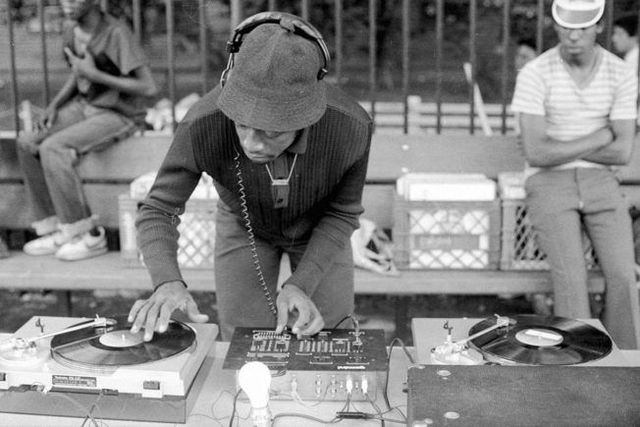
In 1967, Clive Campbell aka Kool Herc, arrived in the South Bronx from Jamaica. He is considered one of the founders of hip-hop. Kool Herc was what later became known as the DJ. He brought with him the Jamaican style, where the DJ played the leading role. Soon he was called an MC (master of ceremony) – he selected records, played them, and announced them. When DJs started rhythmically speaking texts over music, this became known as rap. Kool Herc’s influence with such parties spread, and soon he, Grandmaster Flash, Afrika Bambaataa, and Grandmaster Caz began playing at parties throughout the Bronx and also in Brooklyn and Manhattan. Soon, Kool Herc started to repeat instrumental breaks for dancers’ convenience, known as breaks, during which dancers showcased their skills on the dance floor. Kool Herc noted the dancers’ enthusiasm for these breaks and coined the term B-Boy, or Break boys, for those who moved in the breakdance style, with the dance itself being called breakdancing style (breaking).
By the end of the 1960s, breaking existed as two independent dances—New York’s acrobatic style, known in Russia as lower breakdance, and Los Angeles pantomime (upper breakdance). In the late 1970s, hip-hop’s influence and geography expanded, starting in New York. In the Harlem, Bronx, and Queens districts, DJs and breakdance groups began performing. Battles between DJs and dance competitions started. Various street gangs of dancers became known as breakdance crews, practicing, performing together, and developing their skills.
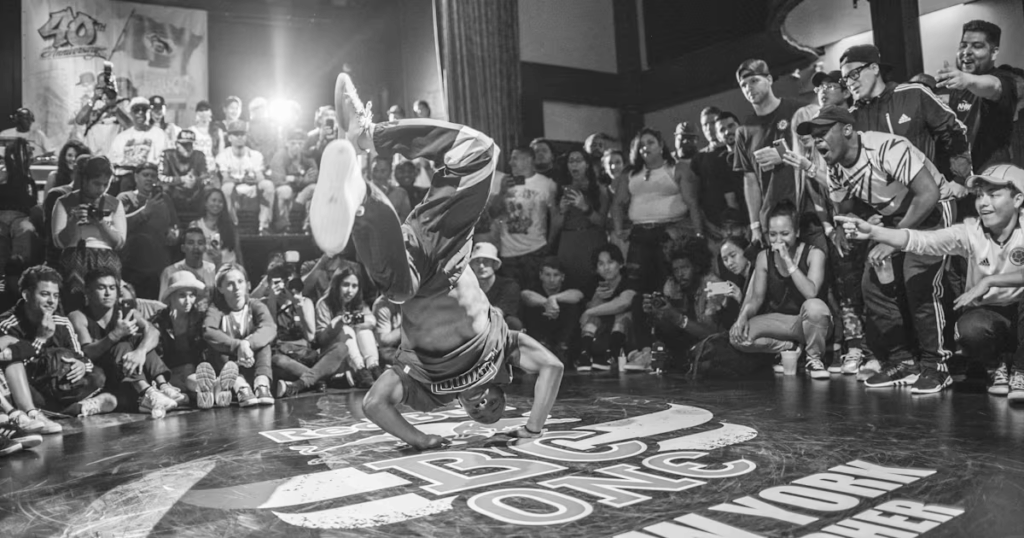
All of this led to positive consequences—a reduction in the aggression of street gangs, with negative energy being channeled into a peaceful form. Hip-hop culture represented a politically motivated alternative to crimes and violence. Hip-hop dance battles kept New York’s children and youth away from drugs, alcohol, and street violence, as breakdancing required a healthy lifestyle. Hip-hop improved the atmosphere of New York’s crime-ridden neighborhoods. Music and dance are truly universal means of breaking down barriers between people. And despite negative incidents still happening, hip-hop culture, as it progresses, plays a large role in resolving conflicts and increasingly strengthens its positive influence.
Los Angeles Pantomime, called boogie, has African American roots. The famous ticking, a broken dance where the dancer gets caught in different positions, has African roots. Waiving, where the body moves in free waves, emerged as a rhythmic chorus to ticking. In 1969, dancer Don Campbell created Campbellocking as a pop version of folk dancing. Soon the name transformed into locking. From 1973-77, Lockatron Jon and Shabadu introduced locking and popping in New York. This was the first real form of hip-hop dance. In 1978, hip-hop dance continued to evolve with styles like popping and the robot.
Hip-hop veteran and leading B-Boy from the 1970s is Richard Colon, known as “Crazy Legs.” His breakdance group “Rock Steady Crew” is one of the most famous, the engine that pulled the new hip-hop culture out of the darkness of the early 80s. Breakdance and rap became synonymous with hip-hop, which also includes graffiti as a factor contributing to the popularization of hip-hop. In slang, a person involved in graffiti is called a tag. Initially, street artists painted building walls and subway cars with spray paints. Gradually, the most interesting pictures moved into art galleries. Becoming fashionable, hip-hop went beyond the USA and for a period captured part of the white youth. Interest among white youth in hip hop, both in America and in other countries, probably began with breakdancing, where language knowledge was unnecessary, as the language of movement is universal. This exotic way of moving caused tremendous interest in the mid-80s after the release of two films “Breakin'” and “Beat Street.” White young people began to embrace the ideas of break and rap. In many countries’ youth communities, there was a bright flash of interest in breakdance and rap. In the second half of the 80s, the enthusiasm turned into a more relaxed flow.